Source Silent Rechargeable Wireless Mouse for Office, Gaming, and Travel
Find 30 silent rechargeable wireless mouse options featuring Bluetooth connectivity, BlueTrack or optical positioning, and ergonomic designs. Compare models like ZHC-0101 and Magic Mouse 2 variants with customizable colors and logos for diverse business needs; compare the available evidence and request quotations based on your requirements.
Key considerations
Products List




Comprehensive Sourcing Guide
Silent Rechargeable Wireless Mouse Sourcing Guide
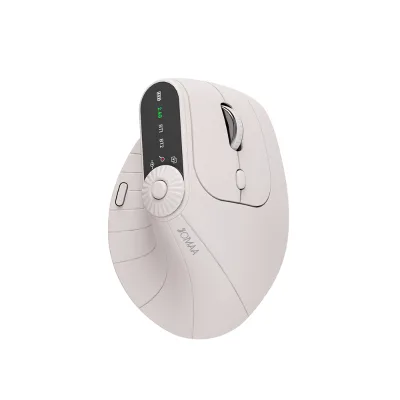
Procuring a silent rechargeable wireless mouse requires balancing ergonomic design with specific connectivity needs observed in current listings. Buyers should prioritize models featuring Bluetooth or 2.4GHz wireless transmission to ensure stable performance across various devices. The market offers options with multiple color choices, including white, pink, green, and black, allowing for customization to match corporate branding or user preferences.
When evaluating potential inventory, verify that the selected unit supports the required operating distance, which typically ranges from 10 to 15 meters in observed data. It is essential to confirm whether the product utilizes optical or BlueTrack positioning principles, as this affects surface compatibility. Additionally, check if the mouse includes a rechargeable battery system, as this distinguishes it from traditional disposable battery models and impacts long-term operational costs.
Product Scope and Observed Listing Signals
The current market presents a diverse range of models, from standard office mice to specialized gaming variants with symmetric or left-hand ergonomics. Listings indicate that customization is available for many units, enabling buyers to request specific branding or packaging configurations. The observed product models include specific identifiers like ZHC-0101 and Q2, suggesting a wide variety of form factors and feature sets available for immediate procurement.
Buyers must carefully distinguish between general office styles and high-performance gaming mice when reviewing product descriptions. Some listings highlight features like silent switches and high-quality construction, while others emphasize competitive gaming applications with four-way rollers. The packaging varies significantly, ranging from retail boxes to bulk carton shipments, which directly influences the initial unit cost and logistics planning for the procurement team.
Technical Specifications to Verify
Technical due diligence should begin with confirming the wireless transmission frequency and positioning principle to ensure compatibility with existing hardware. While some units operate on 2.4GHz, others utilize Bluetooth, and the positioning mechanism may be optical or BlueTrack depending on the specific model. Verifying the operating distance is critical, as specifications in the market range from 10 meters to 15 meters, affecting usability in larger office environments or conference rooms.
Physical dimensions and weight are equally important for user comfort and portability requirements. Observed data shows sizes ranging from compact 10cm cubes to larger dimensions like 10.3cm by 5.8cm, with weights varying from 0.25kg to standard mouse weights. Buyers should also verify the DPI settings, as some models offer 1600 DPI suitable for office work, while others may require higher precision for gaming or design tasks.
Compliance and Safety Documentation
Ensuring that all sourced wireless mice meet international safety and electromagnetic compatibility standards is a non-negotiable step in the procurement process. Although specific certification names are not listed in the provided data, buyers must request proof of compliance with regional regulations such as CE, FCC, or RoHS before finalizing any order. This documentation validates that the electronic components and battery systems within the mouse do not pose safety risks to end-users.
Packaging and material safety should also be scrutinized to ensure they align with environmental regulations and customer expectations. The observed data mentions various packing standards, including retail boxes and bulk cartons, which must be free from hazardous materials. Procurement teams should verify that the supplier provides a Declaration of Conformity for the specific batch, ensuring that the materials used in the casing and internal components meet current safety guidelines.
Cost Drivers and Commercial Terms
The final cost of a silent rechargeable wireless mouse is heavily influenced by the Minimum Order Quantity (MOQ) and the level of customization requested. Observed MOQs range from as low as 10 pieces to 1000 pieces, creating flexibility for small startups while offering volume discounts for larger enterprises. Buyers should negotiate based on their specific volume needs, as higher quantities often reduce the per-unit price significantly, especially when custom branding is involved.
Lead times and shipping logistics are additional cost factors that can impact the total landed cost of the procurement. While some suppliers offer a delivery time of just three days, others may have longer production cycles depending on the complexity of the order. It is crucial to clarify whether the quoted price includes packaging costs, such as retail boxes or bulk cartons, and to understand the payment terms associated with different order sizes to avoid unexpected financial burdens.
Supplier Qualification and Quality Control
Selecting a qualified supplier requires verifying their production capabilities and quality assurance processes to ensure consistent product performance. Buyers should confirm that the supplier has a track record of manufacturing wireless peripherals with reliable connectivity and durable switches. Given that the origin is listed as China, specifically Zhejiang, it is advisable to request factory audit reports or third-party quality inspection results to validate their manufacturing standards.
Quality control measures must be established to prevent defects such as inconsistent silent switches or battery failures. Procurement teams should implement a pre-shipment inspection protocol to check for physical damage, correct labeling, and functional testing of the wireless range. It is also important to verify that the supplier can maintain consistency across different batches, ensuring that every unit meets the specified ergonomic and performance criteria.
Long-Term Procurement Checks
Establishing a long-term relationship with a supplier involves regular performance reviews and continuous quality monitoring to maintain product standards. Buyers should schedule periodic audits to ensure that the supplier continues to meet the agreed-upon specifications for wireless range, battery life, and build quality. This proactive approach helps identify potential issues early and ensures that the supply chain remains stable and reliable over time.
Future-proofing the procurement strategy requires staying informed about technological advancements and market trends in wireless mouse technology. As new positioning principles or battery technologies emerge, buyers should be prepared to adapt their specifications to maintain a competitive edge. Regular communication with the supplier regarding product updates and potential improvements will help ensure that the sourced products remain relevant and high-performing in the evolving market.
FAQs
Can silent rechargeable wireless mice be customized with logos?
Yes, printed logos are available for these devices. Buyers can request branding on the product surface to enhance corporate identity. This customization option supports bulk orders and allows businesses to create unique merchandise. The feature is widely offered by manufacturers to meet specific marketing needs and brand visibility requirements.
What is the typical delivery time for these mice?
The standard delivery time is three days for many suppliers. This rapid turnaround supports urgent procurement needs and quick inventory replenishment. Buyers should verify specific lead times with individual vendors as production schedules may vary. Fast shipping options are commonly available to ensure timely project completion and operational continuity.
Which wireless transmission frequencies are used in these mice?
These mice typically utilize 2.4GHz wireless transmission frequency for stable connectivity. This frequency band ensures reliable performance and minimal interference in office environments. The wireless connection mode allows for flexible usage without cable constraints. Buyers benefit from consistent signal strength and responsive cursor control during daily tasks.
What packaging options are available for bulk orders?
Products are packed in cartons or retail boxes for bulk shipments. Standard packing includes 100 pieces per carton with specified weight limits. This efficient packaging method protects items during transit and simplifies logistics handling. Buyers can choose between retail-ready boxes or standard carton packing based on their distribution requirements and storage capabilities.
How does the ergonomic design of these mice benefit users?
The symmetric ergonomic design supports comfortable use for both left and right hands. This feature reduces strain during extended computer sessions and improves user satisfaction. The shape accommodates various hand sizes and grip styles effectively. Buyers appreciate the inclusive design that ensures accessibility and comfort for all employees in shared office spaces.
What is the minimum order quantity for these wireless mice?
The minimum order quantity starts at ten pieces for many suppliers. This low MOQ allows small businesses to test products before larger commitments. Buyers can place small initial orders to evaluate quality and performance. Flexible ordering terms support diverse procurement strategies and reduce financial risk for new product introductions.
What positioning principles are used in these optical mice?
These mice use optical or BlueTrack positioning principles for accurate tracking. Optical sensors provide reliable cursor movement on various surfaces without requiring a mouse pad. This technology ensures precise control and responsiveness during work tasks. Buyers benefit from consistent performance and reduced maintenance needs compared to traditional mechanical ball mice.